“I love BHS because it really does feel like a family. All staff and students know each other, are extremely supportive of one another and show amazing levels of respect throughout the school. There really isn’t another school like it!”
Miss Yates
Putting students and families at the centre — supporting learning, wellbeing and inclusion.
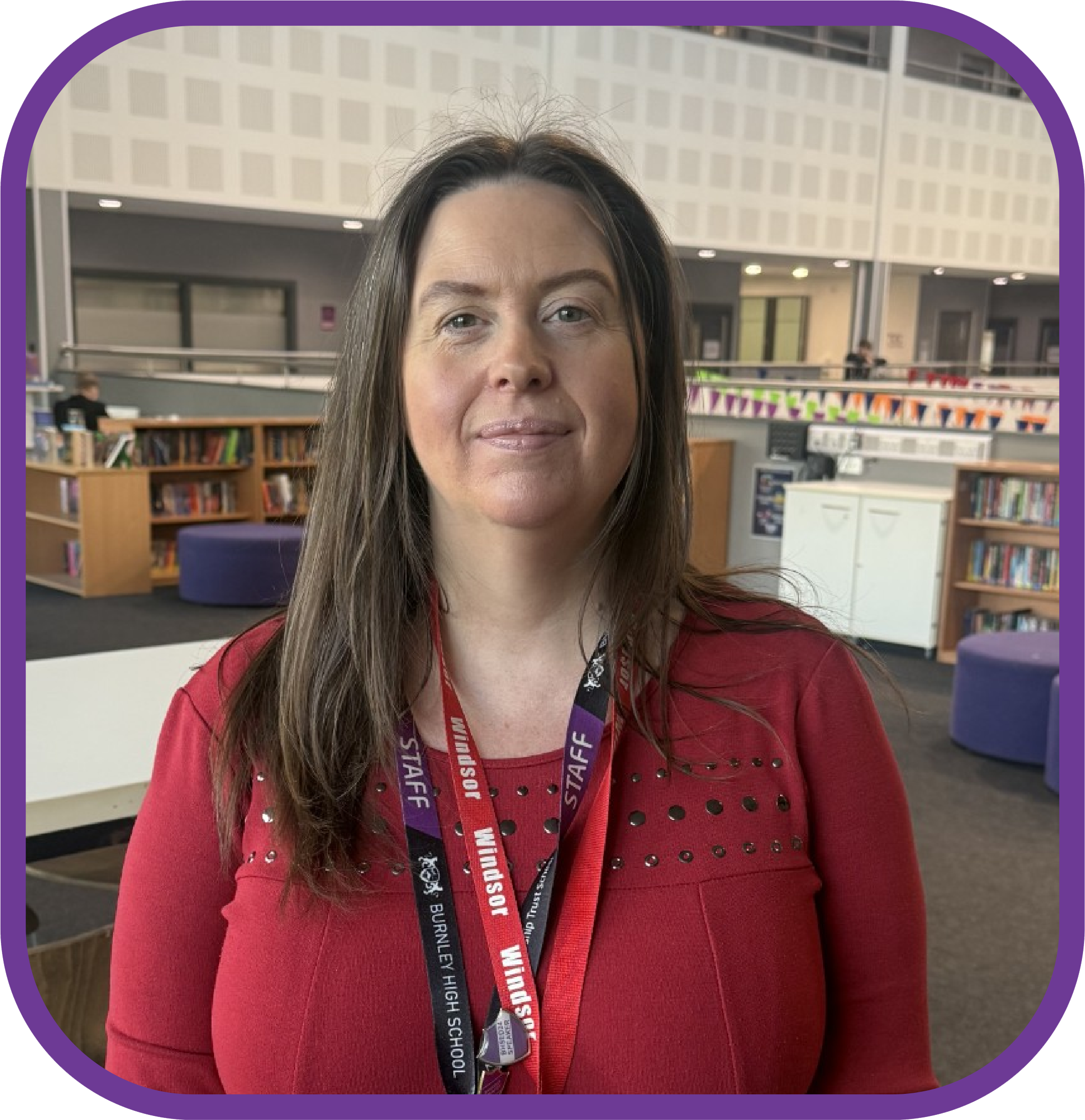
SENCO
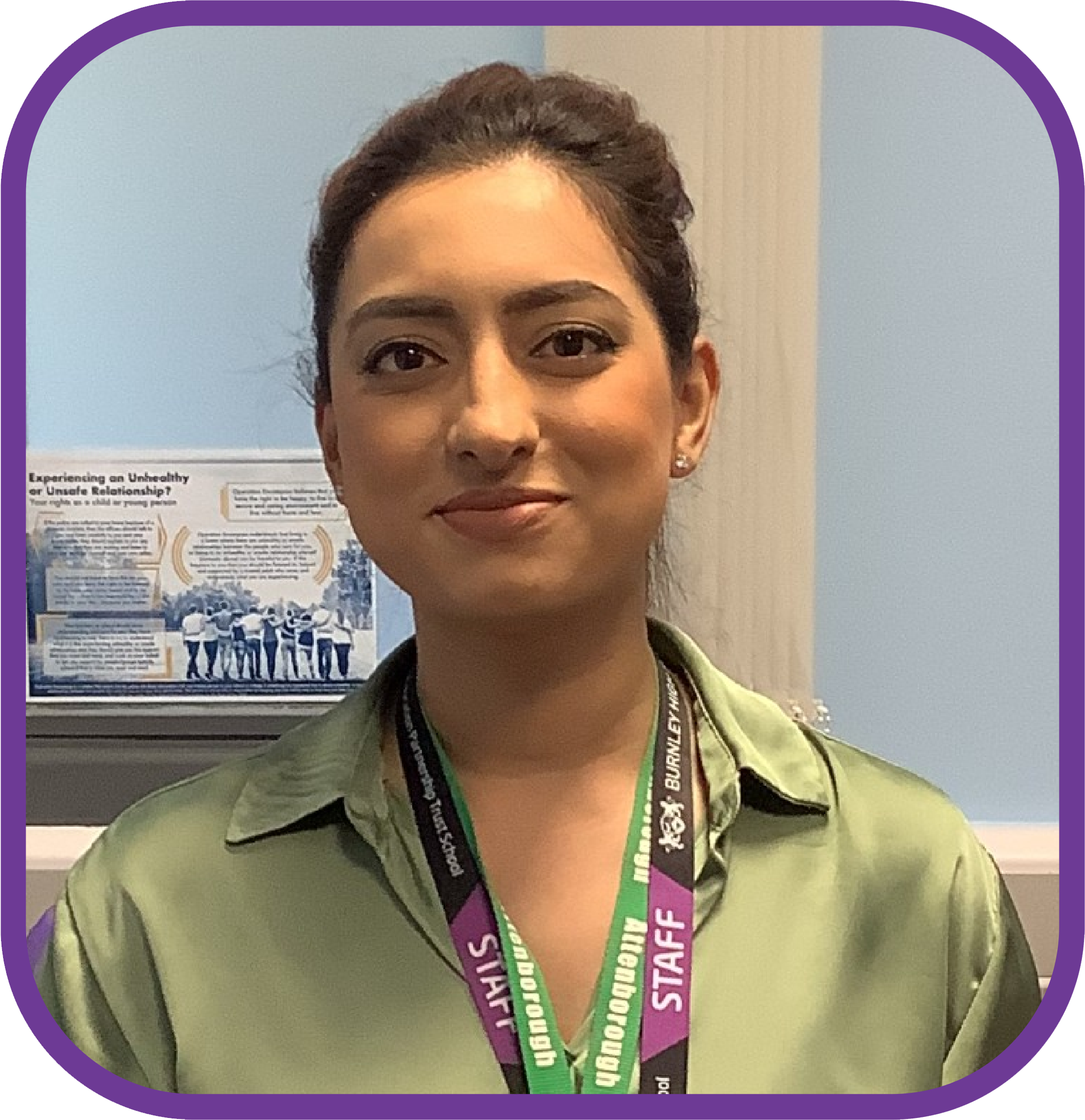
Assistant Headteacher
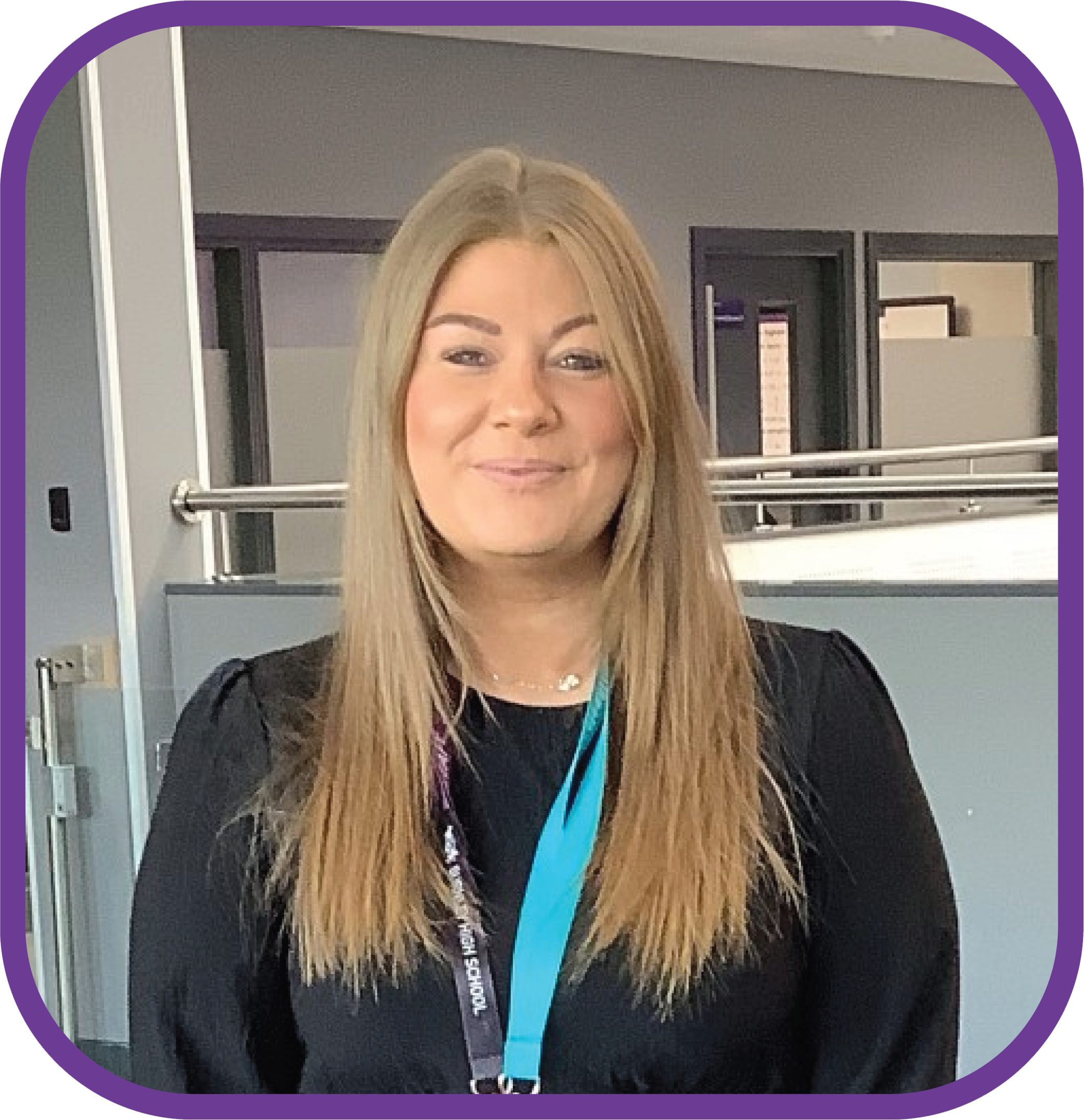
Higher Level Teaching Assistant
SENCO: Mrs Joanna Garvey
Email: jgarvey@burnley-ept.com
There is nothing more important to us than meeting your child’s needs.
At Burnley High School, we ensure that a child with SEND gets the support they need – this means doing everything we can to meet children and young people’s SEND.
A guiding principle for the SEND department is to put the student and their family at the centre of what we do and to ensure that children with SEND engage in activities of the school alongside children who do not have SEND.
The SEND Code of Practice makes it clear that all class and subject teachers are responsible for meeting SEND and must make every effort to meet the needs of children and young people with SEND. Most children and young people with SEND have their needs met through universal, mainstream education provision.
Our school is an inclusive learning community where each individual is respected and valued. Our ethos unites our whole school family and collectively we recognise the role we all play and the strengths each person brings.
At Burnley High School, we believe that all students have the right to access and enjoy every aspect of school life, regardless of any special educational need or disability (SEND).
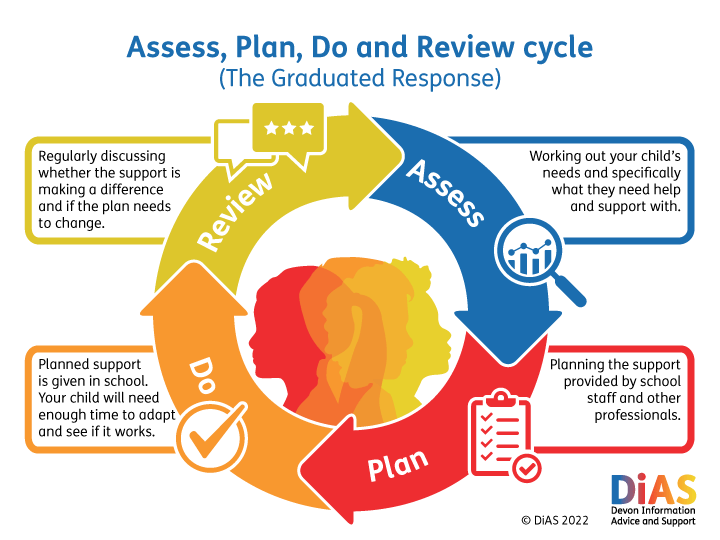
The SEN Code of Practice is specific about good practice once a potential SEND is identified.
By taking these four steps, schools will be following a “graduated approach” to meeting SEND needs. This cycle will be continually revisited for as long as the child has SEND.
The focus on progression is especially important for students with SEND at transition from KS2. The SENCO ensures that detailed information on vulnerable students and those with SEND is gathered, alongside meetings with parents/carers.
This allows for provision to be in place prior to joining Burnley High School and enables a smooth transition, ensuring the curriculum is designed around the students’ needs.
Transition between KS4 and KS5 for SEND students is led by the SENCO, facilitating bespoke taster sessions as well as CEIAG to allow continuous learning for all students.
Our SEN policy and information report aims to:
Pupils are provided with appropriate aids and adaptations as necessary to enable them to access the curriculum without disadvantage, thus having equality of opportunity to reach their potential.
Examples of adaptations may include:
A lift ensures that all areas of the building are accessible to all pupils.
Advice issued by speech and language therapists, physiotherapists and occupational therapists is distributed to relevant staff so recommendations and strategies can be incorporated into lesson planning.
In addition, all staff delivering intervention programmes have received extensive training on Literacy Catch-up, Numeracy Catch-up, Dyslexia support, speech and language.
Speak to the school in the first instance and the SENCO should be able to advise you on appropriate next steps. These may involve assessments being carried out within the school, or a referral being made to the appropriate service. Such referrals may be done by school or, dependent upon the nature of the concern, by the GP.
The Learning Support Department comprises a small team consisting of our SENCO, HLTA and LSAs who work in a variety of roles to promote the learning and wellbeing of all pupils. The nature of the support provided is determined by the needs of the individual pupil.
Many teaching assistants work within whole class lessons, with the aim of removing the barriers to learning. Our LSAs are assigned to a subject area and work closely with subject specialist teachers to support learning through differentiation and adaptation of resources, and additional explanation where needed.
Pupils completing work as independently as possible is a priority; teaching assistants will never complete the work for a pupil, as this would be detrimental to progress and independence.
Not all pupils with SEN have access to additional in-class support. Some attend short, targeted interventions (often 1:1) such as Literacy Catch-up, Numeracy Catch-up, Homework Club and handwriting intervention to help pupils access the full curriculum.
All children with SEND have a pupil passport which provides a picture of their needs and recommendations for adaptive strategies teachers can use to best support them. Pupil passports are written with pupils and parents/carers and updated at least annually.
For specific needs (e.g. dyslexia, visual impairment or hearing impairment), teachers follow strategies recommended by advisory teachers and the SENCO. Where appropriate, pupils are issued resources to remove barriers to learning and access the curriculum as fully as possible.
Regular assessment and monitoring takes place for every pupil across all subject areas and is reported to parents/carers in the form of a mark sheet, a full written report and a Parent/Carer Evening throughout the year.
Full written reports are issued annually and parents’ evenings take place annually. Year 7 pupils also have a ‘settling in’ evening in October, and Year 11 pupils have an additional ‘Raising Achievement’ parents’ evening.
Pupils who attend interventions are assessed three times over the year, enabling adjustments to provision as appropriate.
Parents/carers are always welcome to contact the school with concerns and the school will contact home where necessary.
Burnley High School has a very strong pastoral and safeguarding network. As a small school, our heads of year and form tutors know our pupils very well.
Where there is serious concern about a pupil’s mental health, a referral may be made, with parental consent, to the educational psychologist or to ELCAS (the child and adolescent mental health service).
Burnley High School treats all allegations of bullying seriously and all are fully investigated. Pupils are encouraged to let someone know immediately if they feel bullied.
In the summer term, our SENCO visits all feeder primary schools and meets with key staff there. This enables information to be shared and appropriate provision to be put in place prior to the September transfer.
Vulnerable pupils may be invited to pre-induction visits to meet staff and familiarise themselves with the school building.
Advice is sought from the relevant professionals to ensure that appropriate resources and equipment are in place prior to a child starting at Burnley High School.
Provision in place at the primary school will not necessarily continue in the same form following transition due to changing needs and the nature of a secondary school environment.
Great importance is placed on pupils working independently, so only a small number of pupils have 1:1 full-time support. Staff focus on removing barriers and enabling pupils to complete tasks themselves.
Regular discussions take place with all those involved with the pupil to ensure the best possible package of support is in place.
Miss Yates



© Burnley High School, Byron St, Burnley, BB12 6NX
Policies